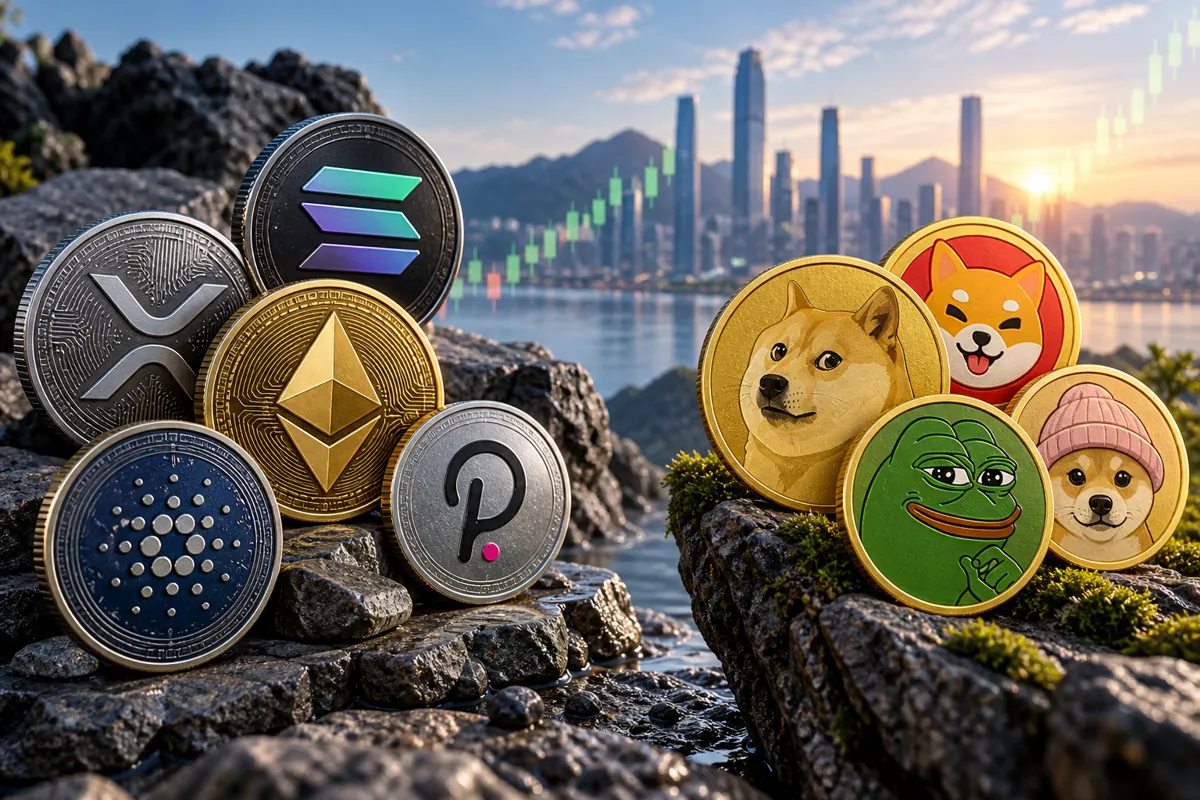
Altcoins & Memecoins
Dogecoin, Shiba, Cardano, Hedera and other alternative coins
Introduction
Over the past few years, the cryptocurrency market has expanded far beyond Bitcoin and Ethereum. Among the countless digital assets, altcoins and memecoins have gained significant attention from investors and enthusiasts alike. Today, these coins represent more than just another form of digital currency; they embody community-driven projects, speculative investments, and cultural phenomena.
Understanding what altcoins and memecoins are, how they operate, and their potential in the financial landscape is essential for anyone looking to navigate the modern crypto environment. While some coins aim to solve specific technical problems, others thrive on social media hype and internet culture, often experiencing rapid price swings and high volatility.
Definition and core concepts
Altcoins, a contraction of "alternative coins," refer to any digital currency other than Bitcoin. Launched between 2011 and 2023, thousands of altcoins have entered the market, with projects like Ripple (XRP), Litecoin (LTC), and Cardano (ADA) gaining prominence. These coins often serve different purposes, such as enabling faster transactions, increasing privacy, or supporting decentralized applications.
Memecoins are a subset of altcoins that stem from internet memes or viral themes. They typically have no underlying technical innovation but leverage community engagement and social media to drive demand. Examples include Dogecoin (DOGE), launched in 2013 based on the "Doge" meme, and Shiba Inu (SHIB), which gained popularity in 2021. Memecoins are often perceived as speculative assets, with their value heavily influenced by online hype rather than fundamental utility.
Both altcoins and memecoins are built on blockchain technology, primarily using forks or variants of the Bitcoin or Ethereum protocols. Altcoins can utilize different consensus mechanisms—Proof of Work (PoW), Proof of Stake (PoS), or newer algorithms—aiming to improve security, scalability, or decentralization. Memecoins usually follow the same technical standards as other tokens but focus on community-driven growth rather than technological advancement.
Key features of altcoins and memecoins
- Decentralization: Most are managed through blockchain networks that are distributed among many nodes.
- Supply controls: Some have fixed supplies (e.g., Bitcoin with 21 million coins), while others employ inflationary models or staking rewards.
- Community influence: Especially in memecoins, social media activity can sharply impact price movements.
- Purpose: Altcoins may target privacy, speed, or smart contract capabilities, while memecoins focus on cultural appeal and social engagement.
How it works
At their core, altcoins and memecoins operate on blockchain technology, which records every transaction in an immutable ledger. Miners or validators confirm transactions based on the underlying consensus mechanisms, ensuring security and integrity. The process shares similarities with Bitcoin or Ethereum but often incorporates modifications for specific goals.
For altcoins with smart contract capabilities, such as those built on Ethereum or Binance Smart Chain, transactions can trigger complex code execution. This enables decentralized finance (DeFi), non-fungible tokens (NFTs), and other blockchain applications. These features increase their utility beyond simple value transfer, attracting developers and users seeking programmable assets.
Token creation typically involves deploying a smart contract or fork of an existing blockchain. Developers specify parameters like total supply, distribution method, and transaction rules. Once launched, coins can be traded on various exchanges, with liquidity often determined by trading volume, community support, and market speculation.
Memecoins often lack technological differences from other tokens but rely heavily on a viral marketing approach. Community members promote memecoins across platforms like Twitter, Reddit, and TikTok. Price surges happen when influencers or media outlets promote these projects, sometimes leading to rapid increases in market capitalization—Dogecoin's value, for instance, skyrocketed from around $0.003 in 2019 to over $0.70 in 2021.
Market dynamics are driven by supply and demand, with many memecoins having an unlimited supply or high inflation rates designed to inflate their circulating supply. This structure encourages speculation and trading frenzy, especially during bullish markets, which can lead to sharp price corrections when hype subsides.
Practical application
Altcoins and memecoins serve a range of functions within the broader crypto ecosystem. Some are used as a medium of exchange or a store of value within specific communities. Others act as utility tokens, granting access to particular platforms or services. For example, Binance Coin (BNB) reduces transaction fees on the Binance Exchange, while Chainlink (LINK) facilitates data sharing for smart contracts.
In decentralized finance, certain altcoins function as collateral or governance tokens. For instance, MakerDAO's DAI stablecoin relies on ETH and other assets held as collateral. Users can borrow, lend, or earn interest through platforms built on these tokens. Memecoins, while less functionally sophisticated, sometimes gain practical use through integrations or sponsorships, though these cases are relatively rare.
Some traders utilize altcoins and memecoins for speculative purposes. Day traders and swing traders capitalize on price volatility, often employing technical analysis tools like candlestick charts, moving averages, and RSI indicators. During 2021, Dogecoin's trading volume on platforms like Binance increased by over 1500%, with daily transactions reaching billions of dollars.
Investors also look at market capitalization and trading volume to assess potential. Altcoins with market caps above $1 billion, such as Solana (SOL) or Avalanche (AVAX), are considered more stable or established compared to memecoins whose market caps can be below $100 million or fluctuate wildly.
In some cases, memecoins have been used for fundraising or promotional campaigns. Companies and influencers have issued memecoins to engage audiences or support charitable causes, demonstrating alternative uses beyond speculation. However, the high volatility makes memecoins unsuitable for long-term savings but attractive for short-term trading or community engagement.
Regulatory considerations are increasingly relevant. Some jurisdictions are scrutinizing memecoins for potential securities violations, and high-profile exchanges have delisted certain coins following regulatory pressure. Traders should be aware of the legal environment and potential risks involved in memecoin investments.
Potential risks and rewards
- High volatility: Prices can double or halve within a matter of hours, especially in hype-driven memecoins.
- Market manipulation: Pump-and-dump schemes frequently involve memecoins, leading to sudden downturns.
- Liquidity risks: Low-liquidity tokens may become impossible to sell during market stress.
- Regulatory risks: Governments may impose restrictions on certain tokens, impacting their value or trading availability.
Common mistakes
Many newcomers falter when investing in altcoins and memecoins due to a lack of understanding or overreliance on social media hype. One frequent error is neglecting proper research and purchasing based purely on trending posts. This approach can lead to buying overvalued tokens or falling into scams.
Another mistake involves ignoring the technical fundamentals of the project. Coins with weak development teams, no real utility, or promising only viral marketing are highly susceptible to sudden price collapses. Investing in tokens without assessing their whitepapers, roadmaps, and community backing significantly increases risk.
Speculative trading without set strategies or risk management is common. Traders often buy high and sell low when panic selling occurs, especially during market dips. Utilizing stop-loss orders and setting realistic profit targets are strategies that help mitigate losses.
Failing to diversify portfolios also exposes investors to unnecessary risks. Relying heavily on memecoins or a single altcoin can result in significant losses if that asset's value plummets. Spreading investments across multiple coins, considering market caps, and avoiding emotional trading can provide better security.
Expert recommendations
Financial analysts suggest thorough due diligence before investing. This includes reviewing a project's whitepaper, assessing the development team, and understanding the coin's purpose. Coins with active development and transparent roadmaps tend to offer more stability.
Diversification remains essential; experts advise distributing assets across well-established altcoins like Binance Coin or Solana, as well as smaller projects with potential. Despite higher risks, such varied holdings tend to balance exposure and returns over time.
Investors should also adopt disciplined trading practices, such as setting clear stop-loss points and profit-taking levels. Keeping up with market news, regulatory developments, and social media sentiment can reduce surprises and help timing entries and exits better.
Finally, consider the potential for scams and pump-and-dump schemes. Only trade on reputable exchanges, verify the legitimacy of projects, and avoid investments driven solely by viral hype without fundamental backing. Recognizing these patterns can save significant financial loss.
Conclusion
Altcoins and memecoins represent a diverse segment of the cryptocurrency market, marked by innovation, community support, and high volatility. While some serve technical purposes or act as utility tokens within blockchain ecosystems, others thrive on social media trends and internet culture.
Investors need to understand the underlying technology, market dynamics, and potential pitfalls. Due diligence, diversification, and disciplined trading are necessary for navigating this complex space. As the market continues to evolve, awareness of regulatory changes and high-risk behaviors remains crucial.