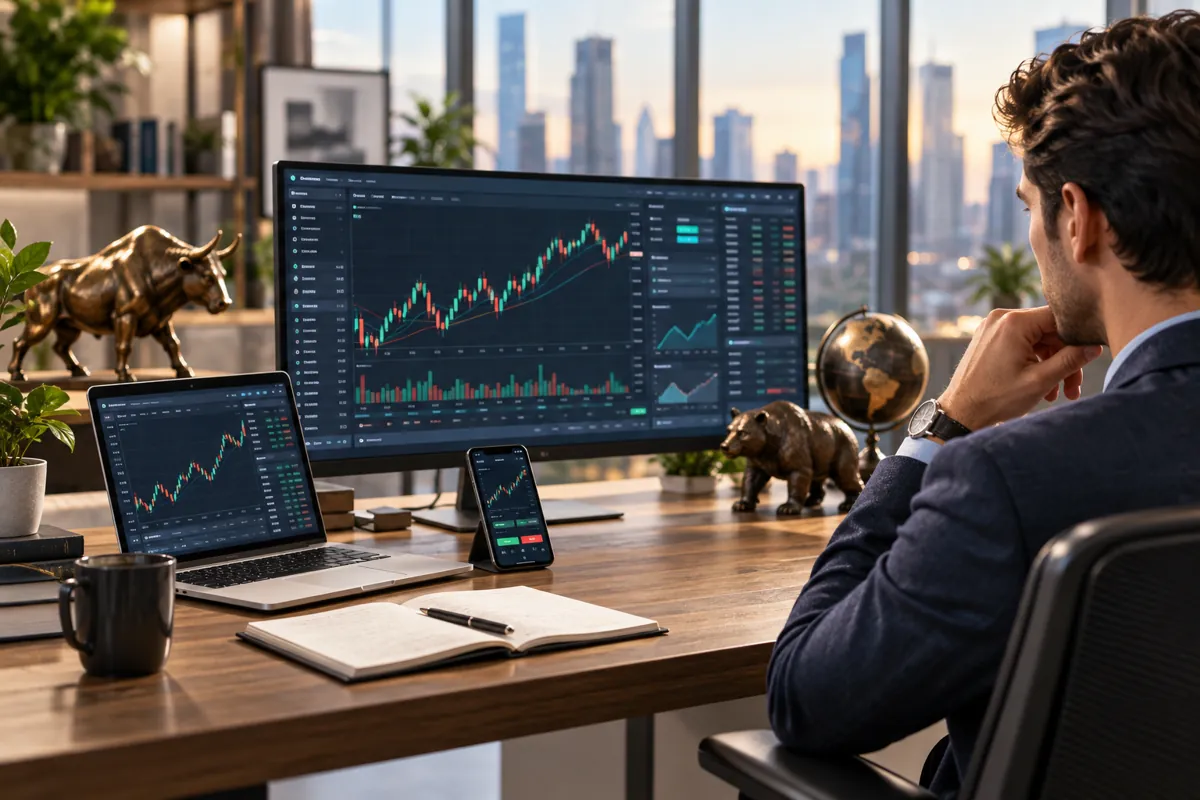
Brokers & Trading Platforms
Fidelity, Schwab, Vanguard, Robinhood and other brokers
Introduction
In the fast-paced world of financial markets, trading platforms and brokers provide the essential link between individual investors and the global economy. They act as the gateways enabling traders to buy and sell a wide range of assets such as stocks, commodities, currencies, and cryptocurrencies. With the rise of digital technology, the number of platforms has expanded rapidly, offering new opportunities and challenges for traders at all levels.
Choosing the right broker or trading platform can significantly impact trading success. It influences factors such as transaction costs, access to markets, trading tools, and user experience. Understanding the landscape of brokers and trading platforms is vital for making informed decisions that align with personal investment goals and risk appetite.
definition and core concepts
A broker is a licensed entity or individual authorized to execute trades on behalf of clients. They act as intermediaries between the traders and financial markets. Brokers often provide additional services including research, market analysis, and margin trading options. For example, in Slovakia, the Financial Market Authority licenses brokers to ensure compliance with national and European regulations.
A trading platform refers to the software or online application through which traders access financial markets. These platforms offer real-time price data, charting tools, order execution, and account management features. Common examples include MetaTrader 4 and 5 (MT4, MT5), cTrader, and proprietary platforms developed by brokers.
The core concepts include spread, which is the difference between the bid and ask price, and leverage, allowing traders to control larger positions with a smaller amount of capital. For instance, a leverage ratio of 1:100 means a trader can control a position 100 times larger than their deposit. Both factors influence potential profits and risks.
how it works
When a trader opens an account with a broker, the platform becomes their interface to the financial markets. The process begins with depositing funds, after which the trader can select assets to trade. The platform provides real-time market data, charts, and order types such as market orders, limit orders, and stop-loss orders.
Executing a trade involves placing an order through the platform. For example, if a trader wants to buy 1,000 shares of a company at a specific price, they submit a limit order. Once the market reaches that price, the broker's system automatically executes the order. The broker then acts as the counterparty or matches the order with other traders via an electronic network.
Market makers and ECN (Electronic Communication Network) platforms are two primary types of trading venues. Market makers quote both bid and ask prices but may take the opposite side of their clients' trades, earning the spread. ECN platforms aggregate quotes from multiple liquidity providers, offering tighter spreads and greater transparency for traders.
Trade management includes setting stop-loss and take-profit levels, which help control risks and realize profits automatically. Platforms also provide features like margin monitoring, order history, and real-time notifications, facilitating active trading strategies.
practical application
For a retail trader in Slovakia, choosing a broker involves considering regulatory compliance, trading costs, and available assets. For example, brokers compliant with the European MiFID II directive are required to segregate client funds and adhere to strict reporting standards, which enhances trader security.
Trading platforms like MetaTrader 5 offer advanced charting, automated trading via Expert Advisors, and support for multiple asset classes. Traders can develop or purchase automated strategies, backtest them on historical data, and deploy them for live trading with minimal manual intervention.
Margin trading enables traders to amplify their positions. For instance, with a deposit of €1,000 and a leverage of 1:100, traders can open positions worth up to €100,000. While leverage increases profit potential, it also exposes the trader to larger losses, making risk management critical.
In day trading, quick execution and access to cheap spreads are essential. Platforms offering direct market access and low latency connections can make a difference in capturing small price movements. Some brokers offer VPS hosting to ensure system stability for algorithmic trading strategies.
Interacting with other traders through social trading features, such as copying positions of successful traders, has become popular. Platforms like eToro provide such functionalities, enabling less experienced traders to mimic professional strategies and diversify their investments with small capital amounts.
Regular analysis and monitoring are necessary. Traders rely on technical analysis tools, economic calendars, and news feeds integrated within platforms. For example, a release of the European Central Bank rate decision can cause significant currency fluctuations, affecting forex trades.
common mistakes
Many traders underestimate the importance of understanding the fee structure. Hidden costs such as overnight financing fees (swap rates), inactivity fees, or high spreads can erode profits over time. For example, a broker charging a spread of 2 pips on EUR/USD can significantly increase the cost of frequent trades.
Using high leverage without proper risk controls is another common error. Traders often overleverage, risking losing entire deposits during volatile market swings. For instance, trading with 1:500 leverage on a volatile asset can lead to rapid margin calls if the market moves against the position.
Failing to use stop-loss orders or ignoring risk management principles can turn small errors into large losses. Research by the Financial Conduct Authority (FCA) notes that 70% of retail traders who do not implement risk controls lose money within the first three months.
Overtrading, driven by emotional reactions or the addiction to fast gains, can also be damaging. Traders should develop disciplined strategies, including defining daily or weekly trading limits. Automation and predefined rules help avoid impulsive decisions during unpredictable market conditions.
expert recommendations
Choosing a regulated broker is non-negotiable. Websites like the European Securities and Markets Authority (ESMA) maintain lists of licensed brokers complying with EU standards, ensuring fund security and transparent operations.
For traders seeking cost efficiency, platforms offering tight spreads and low commissions are preferable. In Europe, brokers with non-commission models often boast spreads as low as 0.1 pips on major currency pairs, which can mean thousands of euros saved annually for active traders.
Utilizing demo accounts for training and testing strategies is highly recommended. Most brokers provide free demo versions with virtual funds, allowing traders to familiarize themselves with the platform's features and test approaches under real market conditions without risking capital.
In addition, incorporating risk management tools such as automatic stop-loss orders, position sizing calculators, and real-time margin alerts can protect traders from unexpected losses. Consistent education and staying updated on market news also contribute significantly to long-term trading success.
conclusion
Understanding brokers and trading platforms involves recognizing the core mechanics behind trade execution, account management, and market access. For traders in Slovakia and beyond, selecting regulated providers with reliable technology and transparent fee structures forms the foundation of sustainable trading.
Employing proper risk controls, leveraging educational resources, and applying disciplined trading strategies can help mitigate common pitfalls. As technology advances, staying informed about new tools and regulatory changes remains essential for effective participation in financial markets.