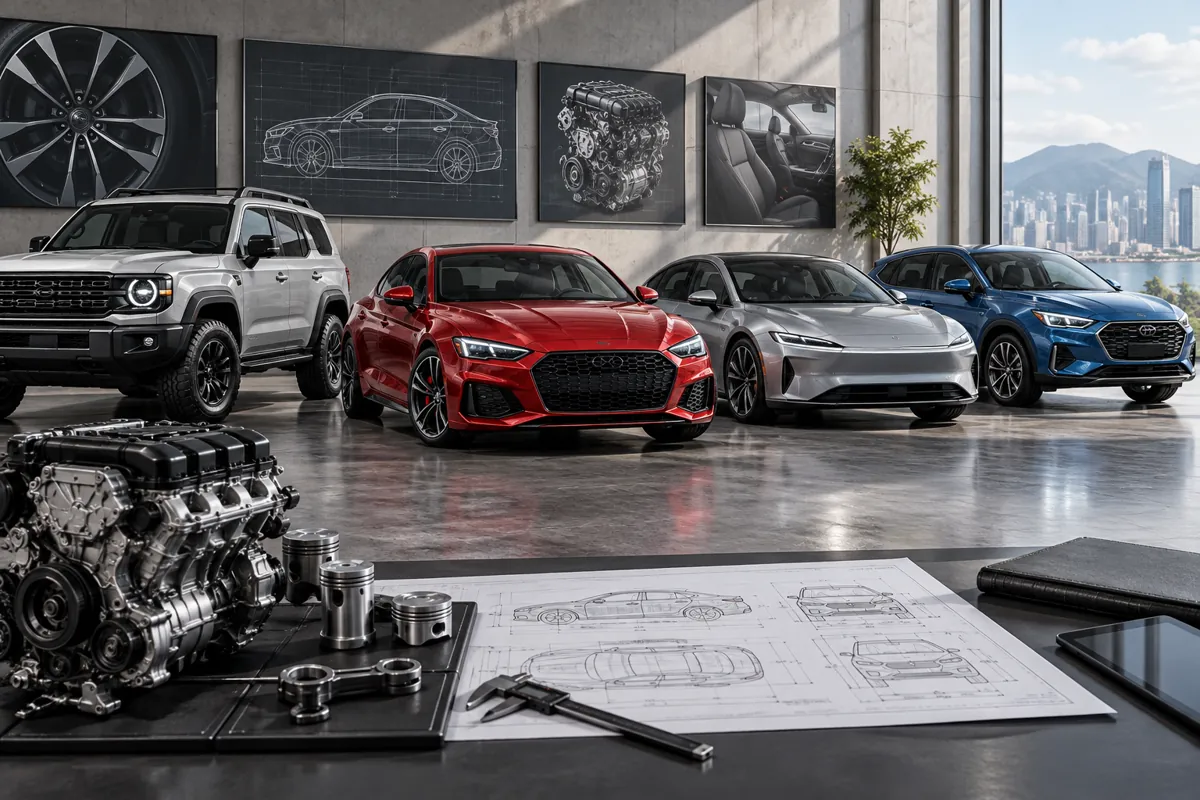
Car Models & Specs
Specs, dimensions and comparisons across car models
Introduction
Understanding car models and their specifications is essential for anyone considering a vehicle purchase, whether for personal commuting or commercial purposes. Car specifications such as engine size, power output, fuel efficiency, and dimensions directly influence performance, safety, and cost of ownership.
In a competitive marketplace with hundreds of models available, having a clear grasp of these details helps consumers compare options effectively. This guide explains core concepts, how specifications work, their practical applications, common mistakes, and expert recommendations.
Definition and core concepts
A car model refers to a specific version of a vehicle produced by an automaker with particular features and design elements. Each model typically has a set of specifications that define its performance, size, and capabilities.
Specifications such as engine capacity measured in liters (for example, 1.6L, 2.0L), horsepower (hp), torque (Nm), fuel efficiency (liters per 100 km), transmission type (manual or automatic), and body dimensions are key indicators of a vehicle’s characteristics.
For example, a Hyundai Elantra 1.6L engine with 128 hp and a curb weight of 1300 kg will perform differently than a Kia Sportage 2.0L with 150 hp and a curb weight of 1450 kg. These core data points help define the vehicle’s performance profile.
Understanding these core concepts allows users to compare models accurately and assess how well a vehicle suits their needs, whether for daily commuting, family use, or commercial purposes.
How it works
Car specifications are determined during the vehicle development process through engineering calculations and testing. An engine's capacity in liters reflects the total volume of all cylinders combined. Larger engines typically produce more horsepower but may consume more fuel.
Horsepower and torque are critical for understanding acceleration and towing capacity. A vehicle with 200 hp and 300 Nm of torque will generally accelerate faster and handle heavier loads than one with lower figures, assuming other factors are equal.
Transmission type influences how power is delivered to wheels. Manual transmissions involve driver shifting gears, offering more control, while automatic transmissions automate gear changes for ease of use. Modern vehicles may feature continuously variable transmissions (CVT) that optimize engine performance.
Fuel efficiency is affected by engine size, transmission type, vehicle weight, and aerodynamics. For example, a compact hatchback with a 1.2L engine might average 4.5 liters per 100 km, whereas a larger SUV with a 3.5L engine may use 9 liters or more for the same distance.
Dimensions such as length, width, height, and wheelbase impact interior space, handling, and parking. A sedan with a wheelbase of 2700 mm offers different interior comfort levels compared to an SUV with a 2800 mm wheelbase but with a higher center of gravity affecting stability.
Practical application
Car specifications serve as a guide for selecting a vehicle that meets specific needs. For instance, a family seeking spaciousness might prioritize a model with a longer wheelbase and higher cargo capacity. In contrast, a daily commuter may prefer a fuel-efficient sedan with a small engine.
Fleet operators use specs like fuel consumption and cargo capacity to optimize operational costs. A delivery company might choose a van with a payload capacity of over 1000 kg and fuel efficiency of less than 8 liters per 100 km.
For off-road or heavy-duty applications, torque and drivetrain specifications matter. Four-wheel drive models with high torque at low rpm are necessary for challenging terrains or towing heavy trailers.
Performance enthusiasts analyze horsepower and acceleration figures. A sports car with 400 hp and a 0-100 km/h time of under 4 seconds appeals to those seeking thrill and quick response in driving.
Practical decisions also include safety and comfort features. A vehicle with a crash safety rating of five stars from Euro NCAP and specifications like multiple airbags, electronic stability control, and lane assist offer peace of mind to buyers.
Knowing the limits of your vehicle based on its specs prevents misuse. For example, exceeding a designated towing capacity—usually specified as 1500 kg or 2000 kg in the vehicle manual—could lead to mechanical failure or legal issues.
Common mistakes
One frequent error is focusing exclusively on horsepower when evaluating a car, ignoring other factors such as weight and aerodynamics. High horsepower does not guarantee good acceleration if the vehicle is heavy or has poor traction.
Another mistake involves comparing fuel efficiency without considering real-world conditions. Drivers traveling in urban environments with frequent stops often see different results compared to official combined cycle figures.
Many buyers overlook the significance of transmission type in specific driving scenarios. For instance, automatic transmissions may offer smoother driving but could have higher maintenance costs, while manuals provide better control and potentially lower repair bills.
Misunderstanding dimensions can lead to issues with parking or interior comfort. Choosing a model without considering width or height might cause problems in tight city spaces or garages with height restrictions.
Failing to verify the vehicle's towing capacity or payload limits specified in the technical data sheet can result in safety hazards or legal penalties when exceeding these limits.
Expert recommendations
Consult manufacturers’ official data sheets and independent reviews when comparing models. Focus on a balanced set of specifications rather than overemphasizing a single aspect such as top speed or horsepower.
For daily use, prioritize fuel efficiency and reliability. Vehicles with a 1.4L or 1.6L engine often offer a good mix of performance and economy for city driving, with averages around 5 to 6 liters per 100 km.
If you require more power for towing or off-road activities, look for models with high torque figures—over 300 Nm—and four-wheel drive options. The Toyota Hilux with a 2.8L diesel engine provides a payload of up to 1030 kg and torque of 500 Nm.
Consider latest safety features and driver assistance systems. Cars equipped with lane departure warning, automatic emergency braking, and adaptive cruise control generally receive higher safety ratings and improve overall driving experience.
Always check the technical specifications for updates or recalls. Manufacturers regularly release updates that improve performance or address safety issues, which can influence long-term ownership costs.
Conclusion
Car models and their specifications form the foundation for informed vehicle choices. Recognizing the key data points and understanding how they influence performance allows consumers to select the right model for their needs and budgets.
Accurate knowledge about specifications helps prevent mistakes and maximizes the benefits of each vehicle, whether for personal use or commercial operations. Clear awareness of these core aspects supports safer, more efficient, and cost-effective vehicle ownership.