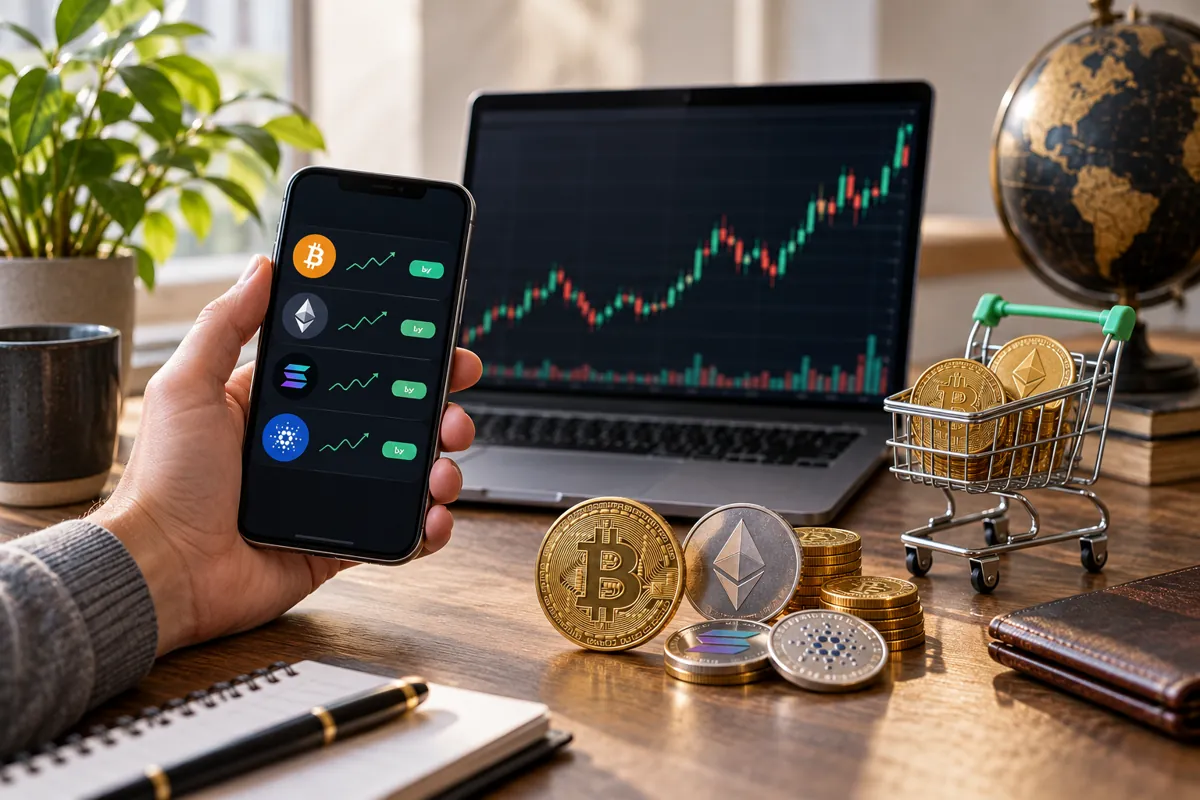
Crypto Basics & Buying
What crypto is, how to buy and first steps for beginners
Introduction
Cryptocurrency has become a significant part of the global financial ecosystem, with an estimated market capitalization exceeding 1.2 trillion USD as of 2023. It offers an alternative means of transacting value outside traditional banking systems, with Bitcoin leading the space by representing approximately 45% of the total market value. Understanding the basics of cryptocurrencies and how to buy them is essential for anyone considering entering this digital financial environment.
For newcomers, the process may seem complex, involving digital wallets, private keys, and various exchange platforms. However, grasping fundamental concepts, how transactions work, and common pitfalls can make investing in cryptocurrencies more accessible and safer. This guide aims to provide a comprehensive overview to help beginners navigate the landscape confidently.
Definition and core concepts
Cryptocurrency is a form of digital or virtual currency that uses cryptography for security. Unlike traditional currencies issued by governments, cryptocurrencies operate on decentralized networks built on blockchain technology. A blockchain is a distributed ledger that records all transactions across numerous computers, making it highly resistant to tampering or fraud.
Key terms include wallets, which are software applications or hardware devices that store your public and private keys; public keys, which serve as addresses for receiving funds; and private keys, used to authorize transactions and access funds securely. The most widely recognized cryptocurrency is Bitcoin, created in 2009 by an anonymous individual or group known as Satoshi Nakamoto.
Other core concepts encompass mining, the process of validating transactions and adding them to the blockchain, typically involving solving complex mathematical problems. Cryptocurrencies are finite resources; Bitcoin has a maximum supply of 21 million coins issued over time, which influences their scarcity and value.
Understanding these concepts establishes the foundation for engaging with cryptocurrency markets, emphasizing the importance of matchless security practices and awareness of transaction mechanisms.
How it works
Cryptocurrency transactions occur directly between users via peer-to-peer networks without intermediary institutions. When a transaction is initiated, it is signed with the sender's private key and broadcasted to the network. Miners or validators then verify the transaction against the blockchain’s consensus rules, which vary between proof-of-work and proof-of-stake models.
In proof-of-work systems like Bitcoin, miners compete to solve cryptographic puzzles. The first to find a solution adds the new block of transactions to the blockchain and receives a block reward—Bitcoin's current reward is 6.25 coins per block, produced approximately every 10 minutes. Conversely, proof-of-stake uses validators who are chosen based on the amount of currency they hold and are willing to "stake" as collateral, reducing energy consumption.
Every blockchain maintains a shared, tamper-evident ledger that records each transaction with timestamps. Once confirmed, transactions become irreversible, making security paramount. Network nodes keep copies of the ledger, ensuring decentralization. This architecture eliminates the need for a central authority and provides transparency.
Wallets generate pairs of cryptographic keys—public keys for receiving funds and private keys for sending. When making a transaction, users sign it with their private key, proving ownership without exposing the key itself. This process ensures authenticity and security while maintaining user privacy.
Transaction speeds depend on network congestion and protocol specifics. Bitcoin averages 7 transactions per second, while networks like Ethereum handle approximately 15-30 transactions per second, with ongoing upgrades aiming for higher throughput.
Practical application
Many retail outlets, online merchants, and service providers now accept cryptocurrencies as payment. Companies such as Overstock, Newegg, and Microsoft display Bitcoin options at checkout, demonstrating broader acceptance. In recent years, nations like El Salvador have adopted Bitcoin as legal tender, allowing citizens to conduct daily transactions using digital currency.
Investors use cryptocurrency exchanges such as Coinbase, Binance, and Kraken to buy and sell digital assets. The process involves creating an account, verifying identity, depositing fiat currency or crypto, and executing buy orders at current market prices or set limits. For example, a user might purchase 0.5 Bitcoin at approximately 25,000 USD per coin, totaling about 12,500 USD.
Crypto wallets vary from mobile apps and desktop software to hardware devices like Ledger Nano S and Trezor Model T. Hardware wallets significantly enhance security, especially for holding large amounts of cryptocurrencies, by isolating private keys from internet-connected devices.
Trading strategies include holding assets long-term ("HODLing") or engaging in active trading based on technical analysis. Cryptocurrency markets are highly volatile; Bitcoin's price ranged from under 4,000 USD in early 2020 to over 60,000 USD in 2021. Traders often monitor news, market sentiment, and technical indicators like moving averages and RSI to inform decisions.
Additionally, decentralized finance (DeFi) platforms utilize cryptocurrencies for lending, borrowing, and creating liquidity pools, expanding practical usage beyond simple transactions. For instance, users can lend stablecoins like USDC or DAI and earn interest rates ranging from 2% to 10% annually, depending on the platform and asset risk profile.
Crypto investments also encompass Initial Coin Offerings (ICOs) and new token launches. Some projects, like Chainlink or Uniswap, have gained significant value—Uniswap's UNI token commanded over 30 USD at peak—and exemplify how early participation can lead to substantial gains.
Despite growing adoption, regulatory uncertainties persist. Countries like China have imposed bans on crypto exchanges and trading, while the European Union works toward comprehensive crypto regulations expected by 2024. Investors should stay informed of regulatory developments to manage risks effectively.
Tax regulations differ globally; in the United States, the IRS treats cryptocurrencies as property, requiring reporting of transactions resulting in capital gains. Proper record-keeping, including transaction dates and amounts, is essential for compliance.
Overall, cryptocurrencies have expanded from speculative assets to practical payment tools and investment vehicles, provided users understand the operational mechanisms and inherent risks involved.
Common mistakes
One frequent mistake involves neglecting security best practices. Sharing private keys or using unsecured devices can lead to theft. Hardware wallets reduce such risks, but users must still be cautious with phishing attempts and fake websites. Overlooking the importance of two-factor authentication (2FA) can make accounts vulnerable.
Another error is inadequate record-keeping. Failing to track purchase prices, dates, and transaction IDs complicates tax reporting and potential audits. Some traders buy assets without understanding market cycles, leading to losses during sudden downturns. For example, buying Bitcoin at an all-time high of 58,000 USD in late 2021 and holding through subsequent declines could result in significant paper losses.
Many newcomers attempt to use overly complicated trading strategies or frequently buy and sell, incurring high transaction fees and losses from poor timing. Binance charges approximately 0.1% trading fee per spot trade, which can accumulate significantly over multiple transactions.
Additionally, impulsive investments based on hype or social media rumors, without proper research, often lead to poor outcomes. The popularity of tokens like Dogecoin or newly launched coins can entice unprepared traders to invest at peak prices and face steep declines later.
Some users neglect to use reliable platforms, falling prey to scam sites or fake exchanges. Verifying exchange license status and user reviews is essential before depositing funds. Avoiding centralized exchanges with poor security records is also advisable.
Expert recommendations
Financial advisors recommend starting with a clear investment plan, specifying risk tolerance and exit strategies. For example, setting profit targets of 20% to 50% and stop-loss orders at 10% to 15% helps manage volatility. Diversifying holdings across different cryptocurrencies reduces exposure to single-asset risks.
For security, experts advise using hardware wallets for long-term storage and enabling all available security measures, such as 2FA and withdrawal whitelists. Regularly updating wallet firmware and practicing phishing awareness are essential components of security hygiene.
Staying informed about market developments is vital. Following official blockchain project updates, news outlets like CoinDesk and CoinTelegraph, and community channels such as Reddit r/CryptoCurrency enhances awareness of potential risks and opportunities.
Moreover, professionals suggest using dollar-cost averaging (DCA) when entering positions. Investing a fixed amount, for example 100 USD monthly regardless of market prices, reduces the impact of volatility and prevents emotional decision-making.
Lastly, comprehensive tax planning is recommended. Consulting a tax specialist familiar with local regulations ensures proper reporting and may optimize tax liabilities. Recording all transactions meticulously aids in compliance and avoiding penalties.
Conclusion
Cryptocurrencies provide a decentralized alternative to traditional money, with technological innovations supporting secure and transparent transactions. Understanding how they operate, their practical uses, and potential pitfalls is essential for anyone interested in participating actively. Careful planning, security measures, and ongoing education serve as the backbone of successful involvement in the crypto market.
As the industry evolves with ongoing technological and regulatory changes, staying informed remains the best strategy to navigate this dynamic landscape effectively.